Our Permanent Neighbor

By the time you are reading this the largest resident of the 800 block of West 38th Street will look different than he does right now. He will likely have shed every yellow leaf, creating a monochromatic blanket beneath his finally skeletal branches. The golden yellow blanket is a late-year rite of passage on our street. In my neighbor group chat, we share photos, both past and present, and try to predict his shed-date. The only certainties are late fall, impressive drop radius, and the uninterrupted layer of leaves covering the cars, road, and sidewalk of the houses at the top of the block. Fortunately, our big gingko is male–the female gingko trees shed berries which smell a lot like vomit. Our big guy seems to cling longer than any other gingko in the neighborhood as here we are on November 30, still waiting. (In 2017, he dropped on November 11 when the leaves were still green.) So on West 38th, in vigil we sit, like family members of someone in the final stages of labor. 

I’ve known gingko trees my whole life. The church we attended throughout my childhood sat on top of a hill, dotted with gingkoes. The Newman Center consisted of a small chapel next to a stately white Victorian house with a wraparound porch and jet black shutters. And the long driveway up to the church was often speckled with fan shaped leaves, gingko berries, and that unmistakable smell. 

I remember playing out the book A Little Princess with my sister and our church friends, sitting in the shade of those trees. Maybe as kids we were unaware of the beauty surrounding us. Or rather, maybe we were the most aware–I never saw the adults out there playing orphan-themed games on the gingko hill. That place felt like a Sunday home and the trees were the walls and the ceiling and the carpet, the furniture, the bed, and a sort of parent looking out for us from a high height.

Gingko trees are famous for their unique leaf shape, their offensive berry smell, and for their resilience. Several gingkos famously survived the atomic bomb on Hiroshima and still stand today. (Why the Gingko? Smithsonian.) 

Scientists have also studied ancient gingko fossils’ traits to compare the carbon dioxide in the air long ago, to today–through the gingko, they’re able to compare prehistoric atmosphere to current conditions. According to this article from Thursd., the gingko is “One of the oldest living tree species in the world… It is the lone surviving member of a long-extinct group of trees that existed before dinosaurs roamed the planet, between 245 and 66 million years ago. The species is referred to as a ‘living fossil’ because it is so old.” The health applications also make the gingko special. Its healing properties are said to help with memory loss, blood abnormalities, eye and vascular health, and possibly more. Gingkoes are messengers from the past, story keepers, warriors, and healers.

Our West 38th Street ginkgo is so large that it ripples the sidewalk next to it–don’t tell DPW. Every fall people come to our street just to capture photos of it. I found a formula online for estimating the age of a gingko that is not as accurate as ring-counting but still should be close to correct. Our gingko is 13 feet around (156 inches), with a diameter of 49.68 inches. A gingko has a growth factor of 3.5-4, making this big guy 173.88-198.72 years old. I wouldn’t bet my life on the accuracy of that measurement but I did all I could. That measurement would certainly make the tree older than our homes which were built about 100 years ago. Maybe it had brothers and sisters that didn’t align with the street plans for this neighborhood and had to go. A sort of eminent domain. Perhaps our tree was the one left standing because it happened to stand between the sidewalk and the street in 1920. 

West 38th Street, Hampden, Baltimore, this country, and the planet have done a lot of changing over 173.88-198.72 years and will do even more in the next 173.88-198.72 years. We have this living fossil among us–one we can admire and photograph, discuss and try to predict, learn from and about. In the midst of such a chaotic world, this tree provides some constancy, some stability, some sense that yes, many creatures are still growing as they should, roots are still drinking water in unseen underground networks, leaves are still blooming and falling and blanketing and blowing away, in a reliable, predictable, beautiful and mournful cycle. As we come and go down our street, as we lift our stroller wheels over the hump in the sidewalk and yell for the thousandth time to a running toddler to “watch your step at the tree!” may Sir Gingko be the constant in our lives, witnessing us come and go, evolve and change, move away and stay put, endure and enjoy, annually relying on that yellow blanket to embrace us once again.
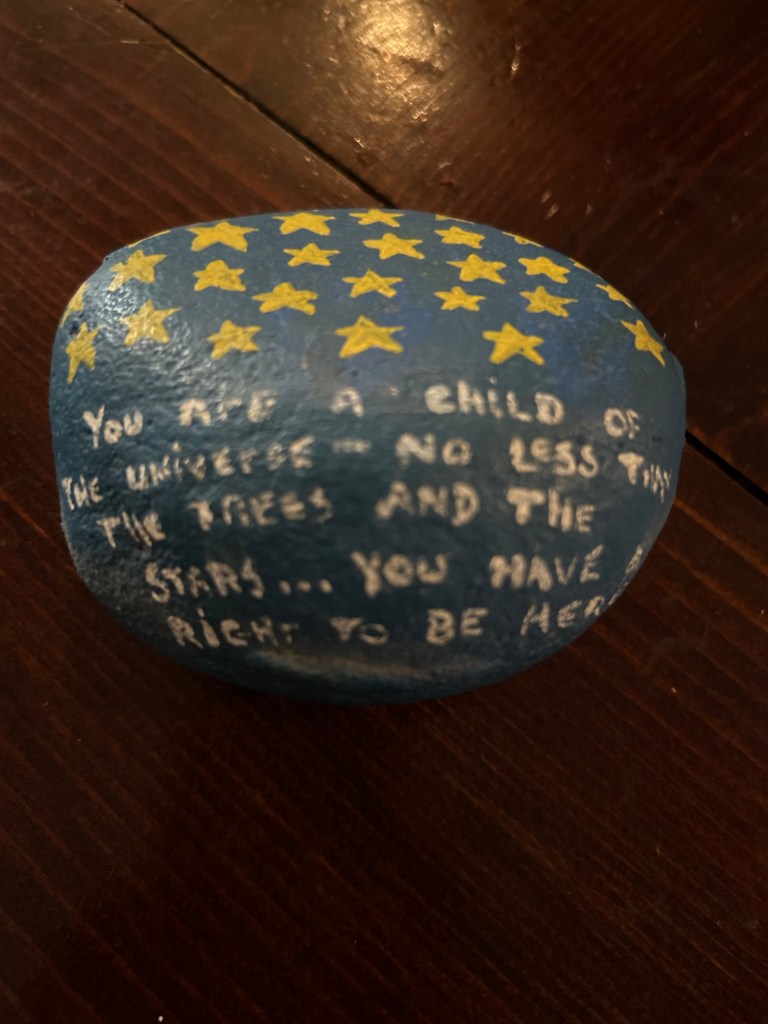
You have a right to be here

“The Desiderata” by Max Ehrmann, Interrupted

Chuckie’s Grave

The bones of my childhood goldfish are within the Montebello Water Filtration Plant. Chuckie lived to age 5 and was the size of a grown man’s palm when he died. We had gone to the beach for a week and left Chuckie’s care to the Taylors, a kind but apparently heavy-handed elderly couple who lived on Kennewick Road for decades. To give Chuckie a proper Doran burial, we had to intern him where so many family walks and so many have-a-catches and so many dog zoomies had taken place in mine and Aubrey’s young lives: the field across the street. A place that exists now only in our memories, a smattering of old photos, and a few choppy home movie clips. 

There used to be two Kennewick Roads. Ours is a long two-sided block of post-war row homes that may have started out as identical but 75 years of personalities and contractors and DIYs have left as distant cousins of the same size. It was a great street to grow up on–-lots of kids and rarely a car on the alley, mudpies and baseball, rollerblades and hide and seek. The other Kennewick was double the length of our own, housed no people and bisected two sides of the water filtration plant. The other Kennewick connected the large three-laned Hillen Road to our neighborhood, Ednor Gardens Lakeside, not by the side of the lake. Along the other Kennewick there was a large grassy plot, maybe a football field and a half. Grass and clovers (once a four-leaf) and buttercups and dandelions and, along the easternmost edge, there was a sparse grove of mature trees. 

Growing up the field was where we walked Nike and then Duffy, ran around, giggled and played and took for granted the strangeness of an open, concrete-lined reservoir of turquoise water that was just another Northeast Baltimore City Neighbor. 

In the home movies, I have bangs that begin near the back of my scalp and Aubrey’s silky pigtails are loose. We are running around, our tiger-striped dog Nike chases a ball thrown by my young dad who’s wearing mid-thigh cutoffs men wore back then. My mom has a long braid down her spine and tanned runner’s legs. We are a family, at a place that’s essentially an extension of our home: that field. 

On September 11, 2001, like many American schoolchildren, we came home early. The other Kennewick would be soon closed to traffic out of fear that the Taliban may poison the City’s water supply. Within a few weeks, jersey walls lined the western edge of the field but we could scoot past for our rituals and use it as we always had. 

At some point after I moved out without my knowledge or consent, the field was surrounded by gates and the field of our youth became enveloped into the filtration plant as a whole. And like so many things of youth, it exists only in our memories. What was our flat, accidental playground has become hills and digging space and is possibly underwater now–and so just maybe Chuckie got the burial he would have wanted all along.

Mom Freedom

There’s a weird freedom attached to being a mom for a few years. It’s the type of freedom you don’t know to dream about when you were lying awake in your childhood bedroom trying to dream dreams like all the Disney characters do. The type that you didn’t know you wanted. The type that finds you sitting in the quiet alone at a loud bar. People talk and yell all around you as you happily hear none of it, mind none of it, and you’re just so pleased to be by yourself and noise is so much a part of your existence already that the noises you are actually able to ignore feel welcome, yet foreign. They might as well be speaking another language, although you walked only a half mile to get here. 

This is the freedom that finds you wearing clothes you grabbed in the dark so that you are warm enough for a light spring rain and inconspicuous enough that no one looks at you. The freedom of looking at members of the next generation and thinking, huh, I have no idea how to dress like that, nor that we were supposed to. This is the freedom of anonymity within the city you’ve lived your entire life. 

This is the freedom of waiting four minutes to be served and when no man-bunned tenderbar says hi within your made up timeline, you just leave and you find somewhere friendlier because there’s no posse following you and your time is the most precious it’s ever been or ever will be. Which brings you back to the reminder that you aren’t free, and don’t want to be, not really, not at all. Because this is also the most loved you will ever ever be. 

Kendall and Lincoln turn one today. One year ago I was getting ready for work when the “water” fell out of me right next to the dining room table. It’s been a year of being a mom of twins and a mom of three and a co-parent with three kids and a fish flopping on a deck in hot sun and an expert and a sobbing mess and a clueless, humbled human in the most human-ish situations. 

It feels huge that these tiny people are a full year old. They’re still tiny, as strangers often comment, and then I smile like I don’t want to just kick them in the shins on the spot. Tiny, but my goodness are they wonderful, magical, whole beings. I feel this birthday more than any I have felt for myself and not just because my birthday is December 27 and easy to ignore. I feel it in my milk ducts. I feel it in my feet. I feel it in my head and my heart and my soul and every single cell. I really do feel it in my feet. We got twins through a complete calendar year. I am still pumping three times per day. Kendall eats like a bodybuilder. Lincoln climbs and leaps without considering the consequences. And they both laugh and babble and call birds “clock,” like “caugggg.” They use one another as step stools and squee in the mornings when they see the other one in the crib across the room– “Oh you’re here again?” 

I had to come to the bar alone just to put on paper that we did this. Chas and I have raised twins from April 12 to April 12. I have leaned on the help and loving kindness of others more than ever in my life. Grandparents and Arlo and family and friends have made this possible. I am floored by the love and support we have received. Kendall and Lincoln are more interactive, verbal, silly, and loving for all of the hands that have held them. And frankly, Arlo is alive and well because of all of the times he’s been taken in by this same collection of people. Gratitude is a silly, insufficient way to describe what I feel for how much support we’ve received this year. Another type of freedom: being able to ask for and accept help. 

I love to give tips and advice to other people, probably to their annoyance, and maybe to their peril, but I submit that there is no advice and there are no tips that can prepare one to be a mother of three, or a mother of twins, or even a mother or parent at all. And there is no freedom like taking a short pause from being a mother, and sitting in a bar. By yourself. Typing your feelings about motherhood wearing a holey sweater, carrying a sequined backpack as people talk absolute gibberish around you as you intermittently stare at photos of your children and know so deeply that this is the most you will ever be loved. 

You are still her.

Last Monday Aubrey and I took all six kids to the Y for a few hours. At one point we stole about two minutes and 12 seconds to volley a ping pong ball back and forth while the kids played air hockey next to us. “Have you been practicing at the Nawrockis?” Aubrey asked me. The Nawrockis are my mom’s cousins. In the before-times, we went there every Christmas Day and played ping pong in their basement between board games, chatting with family and one particularly great year, looking at 1930s yearbooks from the old Eastern High School. There have been so many two minute and 12 second intervals between now and last Monday, yet, those stick with me. Because I was just me. Not a mom or bottle washer or laundry putter-awayer. Just me, a sister. 

I keep coming to these moments of overwhelm in which I realize that other than sleeping, my first two days of work, and dropping off Arlo at school then riding home alone, I have not been by myself in over four weeks. And then I vow that I am going to push myself to spend alone time or schedule kidless friend dates or exercise, even if I have Arlo in the jogger. But then someone cries or someone poops or someone needs to poop and I proceed as I have been. 

In the short term, it’s easier to eat your child’s leftovers and call it your meal or just not eat at all. It is easier to do chores through nap times. It is easier to continually remind yourself, “This is just a season.” And, “this is the most you’ll ever be loved. Savor it.” It is easier to spend all of your waking hours (and some of your sleeping hours) with people who behave as if they want to crawl back into your womb. It’s easier to “wash my hair tomorrow or the day after.” In the long term, doing these things daily will crush you. You’ll be left a shell of the person you once were, though you are much more full really. With love and constant missions and humans and “things we’re working on.” But you’re empty too. You’re scooped out and hollow and also you’re filled up with something else and it’s beautiful and the most incredible, most fulfilling, most magical. 

So may something snap you back to remembering to feed yourself too or take a nap or demand an hour alone because you used to be someone with the time to play ping pong in a basement on Christmas Day. And just like all the yous you’ve ever been, you are still her.

Thoughts on the Eve of Three Years as a Mom

There are some aspects of this newborn twin life I don’t quite understand. Like why the soles of my feet are constantly soot-colored. I don’t get the science of my armpit hair not growing after 25 years of reliable black sprouts, or how my babies can sense my weakest moments and simultaneously begin to scream. I don’t understand how I can feel so much love for these little people I just met or how I possibly made more room in my heart which already felt so full with Arlo. I don’t even really understand how I make it through some of the days nor all of the nights. But somehow, we keep going.

Never have I felt so full of hope and love and anxiety and calm and joy and bewilderment and things to do and things I cannot do anymore. My life has been overhauled. And it’s amazing and it’s impossible and yet somehow it’s daily life and it keeps being sort of being possible.

This is the season of two opposing things being true. This is the season of jolts of energy and no sleep. The season of so much couch sitting to do and so much else to do that’s off of the couch that I can’t really do. It’s the season of feeling like I need a clean home for these fragile people and being incapable of cleaning it. It’s the season of staring at little 8 pound beings and thinking “Wow, you have gotten so big.” This is the season of being unable to stop crying and unable to stop smiling. This is the season of feeling incompetent and unstoppable, a terrible parent and the best mom. It’s the season of feeling like I have so much to write and so many thoughts and not the faculties to sit with pen and paper and not the clarity or the time or the peace to pour it all out. Yet here I am. Trying.

There’s a baby over there across the room and there’s another at my feet in a bouncer and my dad is about to bring my toddler home to me. And Arlo, who turns three tomorrow, seems like a giant now and is so grown up and conversational yet so confused by what has happened to his world and his parents. His head looks enormous and he’s still the tiny little boy who made me a mom three years ago.

I feel intense, overwhelming gratitude for the ways my community has shown up for me in the past three months. Friends cleaned our home, many have made us meals, sent us takeout from as far away as California and Ellicott City. Aub and Chris took Arlo for the night–twice–and my parents kept him for our entire hospital stay. Many have held, fed, and changed the twins, stood in my living room while I got the car parked too far away. People have checked on us, given me hugs and snacks and cards and reassurance, asked me what I need from Trader Joe’s, prayed for us, to different gods. Strangers have told me that I am doing a great job and that I look rested (ha). Twin moms have assured me that “yes, it gets better” and reminded me that my feelings are valid and that this is a crazy proposition–two newborns.

Yet, the thank you notes lay dormant on my to do list. Like I am too mobilized to write them and too paralyzed to write them and so they’re blank. But I do hope you know how much I appreciate you. The incredible weight of my gratitude for everyone is light and beautiful and lovely and so heavy to hold. I will get to those notes eventually. In the meantime, thank you.

Coach

When I entered Mercy as the freshest freshman in 2001, Coach Randy Fowler seemed to me like one of those perpetual creatures at a place. His saunter was confident and slow, his speech southern and concise, and his presence reliable and felt. He seemed like he’d been born at whatever age he was then, right there at Mercy High School. And there, he belonged.

I wasn’t a runner. My mom always had been and when basketball didn’t work out, I thought maybe track and field could be my only way to bypass needing to earn PE credits in junior year gym. I ran one afternoon with my mom, tracked my time on a one and three quarters mile route, and came in to school the next day ready to ask Coach if I was fast. I remember being in the hallway with Sarah, approaching him with more confidence than I actually had and saying something like, “Hi, I’m Jamie’s friend. Last night I ran a mile and three quarters in ___. Is that fast?”

He looked at me, side smiled with a face I’d come to know well and said, “No.”

I probably sulked off pledging to myself and to Sarah that’d be “the last time I talked to that man!” Though, for whatever reason, I toughened my skin and tried out for track anyway. Sarah had lacrosse and I couldn’t spend my afternoons eating chocolate muffins from the vending machine all alone.

As I got to know Coach and solidified my place as a distance runner, I came to understand him better. A former marine, born Floridian, comic, Jeep-driver, Coach was the type of person who made you want to work harder and be better, for him, for your team, and definitely for yourself. He had his own set of -isms, probably some are lost in the cobwebs of my brain while others are burned there forever and I say them to myself when I’m running or just trying to be a human.

  • Mind over matter. If you don’t mind, it won’t matter.
  • Put a little extra butter on your bread tonight.
  • I’m gonna go have a steak and a beer.
  • Charge those hills.
  • Got nothin’ but love for ya.
  • It’s a beautiful thing!
  • And all of our nicknames–mine was Tank.

In our senior year in cross country, we were floating in the top spots in our league, never top three, but usually ranked within the top ten in The Sun. Cross country is a weird sport for a lot of reasons not just because peeing your pants and chafing and vomiting are normal and also not just because of those weird little shorts we had to wear but also because varsity changed week to week. The top five runners were your scorers and whoever was in the five, would be varsity that day. Slots six and seven were tie breakers and eight and on ran JV. Our slots were often changing as we rounded out our season in October 2004.

We arrived for the championship at Oregon Ridge Park and stretched in a bandshell. Coach usually had a spot he liked at any given course in the Baltimore area and I assume that bandshell was his go-to at Oregon Ridge. We had sat down for our water-chugging and stretching when we noticed that there was a swarm of lady bugs. They were landing on us and on our stuff in that bandshell. Someone said that lady bugs were good luck.

We ran our race, did our thing, and sat in the awards ceremony expecting the usual. Fourth or fifth, maybe third. Aubrey remembers Coach McCoach (actual name) from Maryvale flashing a single skyward-pointed finger at Coach. And there it was. We’d won. By one point, we had won. Not just the first cross country championship for Mercy, maybe ever, but also Mercy’s first championship in any sport in years. At the end of year sports banquet, Coach called us the Navy Seals of the school and quite frankly, we believed that about ourselves too. Not because we were cocky or he’d inflated our egos more than we deserved, but because Coach helped us believe in ourselves. There are so many aspects of that man that I try to emulate as an educator. And I learned them when I was 16. Soon after that year, Coach left to coach at Calvert Hall–the boys school up the street. We’d always complained that the boys got all the attention and all the resources, and they did. But, I think Coach had success there, earned much better pay, and maybe coached a prodigy or two. Though, I’ve always imagined we were home for him.

I can still see Coach’s cadence, how he slammed his heels down first, rolling his feet toward his toes. We didn’t ever get details but he didn’t run anymore. Maybe it involved the Gulf War, maybe Somalia, maybe just life. When we went on runs off campus, he led us in his Jeep, a water cooler in the back. We ran from the man in that Jeep. We ran for the man in that Jeep and for one another. And once we’d been on his team long enough, we just ran.

Coach loved Jimmy Buffet and classic rock, his son Matt, new sneakers, dogs, Forrest Gump, effort, and Florida. He loved telling stories and playing the guitar. He loved people with raw talent and even more so, people with no talent who tried really hard. He loved speed workouts and competition, and when we beat rich schools. He loved his wife Pat whom he met one season because her daughter was in our class at Mercy, and after that he was always in a better mood. Coach loved progress and he loved winning. And I know he loved us, too.

This is one of those times when I say to myself, “Why didn’t I write this when he was alive?” And I think we need these reminders here and there. To tell people how we feel, to share how others matter to us, to do something to honor that person. I will go for a run when I can and I will make a point to have a steak and a beer and toast to Coach. I will watch a movie about Steve Prefontaine and text with my cross country friends, many of whom I am still close with today. I will put a little extra butter on my bread. But I did get to text with coach several months ago and I wrote him a card that said the one thing that I think matters the most, the one I will try to replicate for my girls and for Arlo: You helped me believe in myself.

Part I: Crash Babycoot

It took Aubrey and me some time to convince our parents to get us a PlayStation. While we impatiently waited, we played at friends’ houses and pined for the day when we’d inevitably fight over and then grasp our very own gray controller. We’d salivate as the brain cells shot out of our eyes and into my parents’ bedroom television each evening following YMCA after school care. When we actually received our own console some late ’90s Christmas, we were in disbelief. Nancy and Dick had actually succumb. And we played one game: Crash Bandicoot.

Crash Bandicoot. I looked up what animal he is…he’s a bandicoot.

During the pandemic, I have considered exploring whatever modern edition of Crash Bandicoot and learning how to import, teleport, transport it to Chas’s PlayStation 11, or whatever number they use now. I’ve resisted my own video game rebirth, but I have endured many hours of what I call “Shoot Shoot Bang Bang” flinging from Chas’s hands as he sticks out his tongue and maneuvers a sexy duck avatar with a screaming gingerbread man in its backpack.

As a team, however, in June, Chas and I found ourselves at the center of our very own live video game. A game many women have played before me. And many will follow after. (Well, if society doesn’t end, that is.) I never thought of it as a video game-like scenario, until I lived it.

The first challenge of our game began at 2 a.m. It was more of a natural disaster really. A flood. From my body and into our bed. I woke up with the sensation of liquid falling out of me, gushing without my control, painless, warm, constant. I shot up from an awkward left-side slumber and yelled at Chas, “I think my water is breaking!”

Earlier that evening we’d eaten his and hers crab cakes from Chesapeake Oyster and then watched Knocked Up on the couch. It only felt a little on the nose when Katherine Heigl’s character gets mad at Seth Rogan’s for “not reading the baby books.” My own stack sat completely unperturbed right next to the couch. We watched the version that ends with what looks like a real live birth–it was no different than anything we’d seen in our birthing class, but still, I remember thinking, “Well, at least I have two more weeks to go.” While watching, I noticed that my left foot had inflated like a bag of steamed vegetables in the microwave. We pointed and we laughed about it, me making fun of myself and Chas joining in.

Just five hours later and we found ourselves pretending to be calm while gathering items we thought we’d have more time to pack. I sat on a towel while I called Hopkins Labor and Delivery and when we climbed in the car, we’d passed Level 1: The Flood.

Level 2: Negative Pressure Room

When we arrived at Hopkins, we walked a long bridge from the garage to the hospital that made the whole thing feel eerily like an early-morning-hours international flight: stale mouth, emotional confusion, mild discomfort, nonsensical outfit, and extreme exhaustion balanced by an uncomfortable adrenaline.

We made it past the first desk simply by donning masks and asking for labor and delivery. The unfazed security guard let me down by not caring that my water had broken and that I was about to meet the baby we’d spent the past two and a half years trying to make–she also didn’t know where L&D was, a little disconcerting, but we suggested what we could remember from the phone call during the flood.

Riding the elevator to Zayed Tower Floor 8, I had the shakes. At desk two, the guard asked, “Can I help you?” And I said, “I’d like to have a baby please.” Laughter points for me. She made a phone call and we were carted off to a Negative Pressure Room. To pass this level, I needed a negative coronavirus test. Nose swab, 30 minutes, and we’d achieved release. While there, the doctors on duty “checked me,” a term I’d come to know well. I was zero centimeters dilated, with ten being the threshold to enter the upper echelon of levels. “We will check you again in two hours,” she said, “And then if you’re not dilated [HAHA], we will start you on Pitocin.” Still, I didn’t have Covid-19, so onto L&D.

Level 3: Oh, That’s a Cute Little Birth Plan

Chas and I had spent six spring Sundays taking a Holistic Birthing class (on Zoom, of course). I found it informative and fascinating and from it, I crafted a natural birth plan that involved the control I enjoy. I drive a stick shift, after all. I wanted no drugs, no induction, no pain meds, just me and my vagina and my baby, all working together. But the universe is hilarious.

My next “check” would be around 5 a.m. and I felt no different from my first at 3:00. So I started to get my power ups, knowing that once I’d taken Pitocin, there’d be no more power ups allowed, outside of water and that good ice they have at hospitals. At 4:30 I downed about 243 Goldfish crackers, slurped a pint of Gatorade, and shoved in two granola bars.

Around 5, much like Crash Bandicoot and his boxes of apples, armed with the snacks Jamie had given me (thank god) at my drive-by baby shower, they came in to tell me what I already knew: I was zero centimeters dilated. The medical team–from here on out known as “they”–explained that once your water is broken, you’re on a clock. The “water” is the fluid that keeps your insides clean and without it, you only have so much time for your body to remain clean and safe for your baby and for you. Basically, it was time for Pitocin. And the birth plan I’d had uploaded into my medical chart for two months would be impossible to follow. They were able to hook me up to a mobile IV which allowed me to walk around the room as my cervix decided what she’d do, and on what timeline.

I spent the day in rounds of: get up to circle the room while carting around my bag of Pitocin, sit down to write a thank you note, get up to pee, and repeat. They added in the birth ball, the peanut, and fun bed configurations which I added into my rounds. By the late morning, I lost the ability to comfortably hold my pen as contractions became less like suggestions and more like demands. I breathed through them, hung over the bed, attempting to make use of my birth class techniques. Chas helped me with each one and we noticed their quickening pace. Pitocin was kicking my…everything…and they kept increasing the dose as my checks’ results continued to be slow and fruitless.

Level 4: Fuck Your Cute Little Birth Plan

Around 4 p.m., I knew what was happening to me was outside of my abilities, forget the drugless birth I’d imagined, I was in tears with each contraction and seemingly no closer to meeting our baby. And with this realization, I asked for a new kind of power up. The ultimate. The epidural.

At this time I had a sweet nurse who was totally into my natural birth plan. She supported me in every way possible, helping me change positions, adding in props, telling me I’d be okay, welcoming suggestions, rubbing my back. And when I told her I just couldn’t do it anymore, I felt really bad. But, she supported that too and went to get the pain-relieving-they. If heaven exists, there is a special place in it for labor and delivery nurses.

The anesthesiologists teamed up and came in to drill a hole in my back and grant me relief so I could continue my hero’s journey. You know what’s hard? Breathing through the chemically-induced tensing of your uterus while two men nestle a giant needle in your back. Challenge met, I waited to feel less like I was dying. What natural birth plan?

Level 5: Night

As we crept toward 24 hours since my water had broken they continued to increase the Pitocin. I was worried about this level both because I wasn’t sure I was capable of sleep and because my checks were still letting the team down. My ally remained curled in a horrible vinyl chair in front of a fantastic view of downtown Baltimore. Sprinkly lights and movement hovered behind his contorted frame as he, too, attempted sleep. This was one of those levels that was painted gorgeous as consolation for being so difficult.

The night hours wore on with all types of masked intruders–all part of “they”–coming in to look and monitor and peek and use a gloved hand. Again, we were gifted with a fairy angel of a nurse who kept me watered and reasonably comfortable. As I worked my way through the late and early hours I could push a button to add more relief and put at bay the complete destruction of my insides.

I sailed past midnight and with it, the possibility of having a baby on the summer solstice, the longest day of the year. And I floated past 2 a.m., the 24-hour mark, with my mostly closed cervix, napping here and there, hopping through contractions like Crash leaps over so many wooden boxes. And from that 8th floor room, our night sky backdrop cradled us in beauty, if not in peace.

Level 6: Dawn and Day

Morning brought a sense of relief, partially because it meant I didn’t feel pressure to try to force myself to sleep, and partially because I knew, no matter what, they wouldn’t let me go too much longer before meeting my baby.

Around 10 a.m., my cervix had finally received the memo that it had been pumped full of Pitocin and it was time to squeeze out a human. The doctor who said it was time to push looked mostly convinced. Though in retrospect, I think I may have caught a look of skepticism pass from him to other members of his team. He was small and kind and gentle and I think, optimistic.

So I pushed.

We had two nurses one who counted and watched and the other who helped with my right leg while Chas held the left. I did rounds on my back and rounds on all fours. And I pushed and breathed and counted to 10. I beared down and I let up and I cried and squeezed. I ate that good ice and sipped cold water from styrofoam cups and I tried. For three hours and some change, I pushed. There were no cheat codes or special passageways to serve as shortcuts.

But by the tones of the nurses, I knew I was getting no where. All this effort and struggle, using what I’d learned in birth class, this baby wasn’t showing up. When enough time had passed and I’d garnered the right amount of pity, I assume, they brought Dr. Optimist back in to tell me what I wish I’d known 35 hours earlier. My pelvis was too small for this kid’s head and it was time to get prepped for the OR and inevitable Cesarean Section.

Level 7: The Sunroof

The OR felt like a nightclub compared to the COVID-life I’d led the previous three months. There were maybe 14 people in there, all bustling about holding shiny things and wearing ridiculous suits of papery, Easter-colored armor.

If my birth plan was destroyed before, it was being exhumed, tortured, and re-buried now. They whim-bam-boomed my meds, leg covers, blankets, and whatever else they did to the body I’d now lost track of. Chas sat up by my head and a sheet shielded our view of the creation of my new sunroof.

Although I had no concept of time, temperature, I could feel. The room was about 37 degrees Fahrenheit as they sliced into my belly. What I felt…was pressure. I breathed through the prepping, the surgery, the vacuuming, and at some point in that breathing, a 15th person entered the room. They held up the baby for Chas to tell the room what he saw.

“It’s a boy!” he yelled. I think I smiled. And then I commenced violently shaking and shivering as they cleaned Arlo off and counted his toes. I could barely enjoy when they placed him on my chest because my shivering was so intense and if it was 37 degrees in there before, it had to have dropped to 15. They continued playing around inside my abdomen as Chas smiled at our new baby and I just tried to hold still so that they wouldn’t vacuum up my lower intestines.

Chas enjoying the first moments of our son’s life, while I try not to die in the background.

It had been 36 hours and 12 minutes since my water had broken. “Arlo” (Charles Arthur Eby V) had entered the game through the sunroof, all goopy, and loud, and tiny, and so perfect.

I assumed we’d beaten the game. A couple of lazy days and a few hospital meals and we’d be out of there with my healing stitches and our new playmate in tow. I just didn’t realize this was the bonus edition, and there were several levels left to beat…

Teaching in the Time of Covid-19

These are two pieces that are elsewhere but I am linking here.

Please see my latest writing piece on a random British blog: https://www.lwbooks.co.uk/blog/what-our-children-are-missing. My first paid writing gig…and it was in pounds!

 
Also, last night I shared a Stoop Story (pre-recorded) in the midst of a storytelling/improv show. You can see my story around minute 21: https://www.facebook.com/watch/?v=2919414381439413  


April 15th

The Convergence of the Twain

by Thomas Hardy

(Lines on the loss of the “Titanic”)

I
            In a solitude of the sea
            Deep from human vanity,
And the Pride of Life that planned her, stilly couches she.
II
            Steel chambers, late the pyres
            Of her salamandrine fires,
Cold currents thrid, and turn to rhythmic tidal lyres.
III
            Over the mirrors meant
            To glass the opulent
The sea-worm crawls — grotesque, slimed, dumb, indifferent.
IV
            Jewels in joy designed
            To ravish the sensuous mind
Lie lightless, all their sparkles bleared and black and blind.
V
            Dim moon-eyed fishes near
            Gaze at the gilded gear
And query: “What does this vaingloriousness down here?” …
VI
            Well: while was fashioning
            This creature of cleaving wing,
The Immanent Will that stirs and urges everything
VII
            Prepared a sinister mate
            For her — so gaily great —
A Shape of Ice, for the time far and dissociate.
VIII
            And as the smart ship grew
            In stature, grace, and hue,
In shadowy silent distance grew the Iceberg too.
IX
            Alien they seemed to be;
            No mortal eye could see
The intimate welding of their later history,
X
            Or sign that they were bent
            By paths coincident
On being anon twin halves of one august event,
XI
            Till the Spinner of the Years
            Said “Now!” And each one hears,
And consummation comes, and jars two hemispheres.

Of course you know Jack and Rose. Maybe you went to the movie theater in 1997 and saw a naked woman for the first time. You may have wondered about the “real Jack and Rose,” only to be let down by their fictionality. Maybe you sang Celine Dion’s theme song in the shower or fell in love with Leonardo DiCaprio or found yourself at the bow of a ferry boat between Lewes, Delaware and Cape May, New Jersey proclaiming yourself the King/Queen of the World. Titanic could be Millennials’ Film of a Generation, or at least our youth. And while it is a good movie and does contain some historic truths, the real sinking of the Titanic has some striking albeit microcosmic parallels with the situation we are in today.

On April 12th, but in 1912, the Titanic set sail on her maiden voyage across the Atlantic Ocean, departing Southampton, England on the 10th, stopping in France and Ireland and then heading for New York City on the 12th. At 175 feet in height, four city blocks in length, and with as many elevators on board, she was state-of-the-art. Among the passengers were dignitaries, celebrities, industrialists, and other powerful people eager to sail on such a lauded ship. About 700 passengers boarded as third class, some paying as little as $20 fare. The first days of the voyage were peaceful for the 2,240 passengers and crew as they enjoyed the ship’s uncommon amenities.

Winter 2020 in the US was touted as a time of economic prosperity–granted not for everyone, likely not for most. But the stock market was hot and DJT (I just do not feel like including his name in this) was rubbing his own back for all of the things he felt like taking credit for. Americans enjoyed, many hesitatingly because of the environmental implications, an unseasonably warm winter. There was the roundedness of 2020, the convenient verbiage of claiming one’s “2020 Vision,” the hopefulness and then tragedy of DJT’s impeachment and failed removal, Harry and Meghan’s departure for Canada, someone other than the Patriots won the Super Bowl, The Academy Awards, primary elections began, Harvey Weinstein was found guilty, and the fun of Leap Day. 

Then, 108 years ago yesterday, at 11:30 p.m. a lookout spotted an iceberg, the ship turned but not without grazing its side and sending ice aboard. The lookouts, however, were convinced the ship had scooted its way to safety noticing no visible destruction from their vantage, ignorant of the fresh 300-foot gash under the waterline.

On February 27th, the Dow Jones (whatever that means) plummeted amid fears of the Novel Coronavirus ravaging China. Putin wrote a constitutional amendment in Russia banning gay marriage–of course. A few more typical things happened as authorities either could not see or chose to ignore our own gash beneath the waterline.

Thomas Andrews, the ship’s builder, was aboard and as he and other authorities became aware that water was rapidly flooding lower compartments of the ship, he estimated they had about an hour and a half to evacuate. The bow was already beginning to pitch downward. The captain then called for help and ordered the lifeboats to begin loading.

On March 12, DJT instituted a travel ban for 26 European countries, as it became clear that COVID-19 was already in the US and being spread through community transmission. On March 13th, DJT declared a national emergency. 

The first lifeboat departed the Titanic with 28 people. Its capacity was 65. In the mayhem that followed, almost every lifeboat departed for safety under-filled. But in addition to the empty seats, there were only enough lifeboats to save roughly one third of the ship’s capacity.

Many school districts across the US closed beginning on March 16. Professional sports begin cancelling or indefinitely postponing their seasons. Gross under-preparedness leads to shortages of personal protective equipment, ventilators, hospital beds, and healthcare workers.

There are several theories about the Titanic’s “unsinkable” sinkage that led to the deaths of over 1500 people in the early hours of April 15th. The bulk heads were too low which too easily allowed water to pour from one compartment to another if the ship were to rock in any direction. It is also speculated that the ship’s skipper, Captain EJ Smith, was traveling too fast–some say to set a record, others that there was a fire in a lower bunker causing Smith to want to arrive more quickly to handle the situation. There was a potentially ignored warning of icebergs sent to the Titanic from another ship, a cost-cutting measure that affected the integrity of certain rivets, and with a century of hindsight, some historians speculate mirages or hazy conditions that night. Alternatively, second officer David Blair who held the key to the ship’s binoculars was transferred off the ship, neglecting to hand off the key, rendering all those in charge of the direction of the ship, binocular-less. Of all of these possible causes for the ship’s invincibility being so vincible, there are some inarguables. The ship was hardly unsinkable. And there weren’t enough lifeboats.

Many factors have stoked the flames of COVID-19, among them, our global travel patterns, unverifiable stories about bats, pangolins and mistakes in laboratories, and unhelpful rumor-flinging mires the largest nations in the world. We know we have a binocular-less, haughty “captain” who is trying to sail too fast. There have been cost-cutting measures in the past three years to divert funding to the border wall and away from the CDC. With a century of hindsight, what will that generation say about our unsinkable ship, about our idiot captain, about our lack of PPE and ventilators? 

I had to read quite a few pieces of literary criticism on the Thomas Hardy poem in order to even understand it. Hardy argues that humans were too sure of themselves, that they had nothing on nature. He says that all the opulence of the ship’s mirrors and decorations are useless at the bottom of the ocean. It’s as if nature has proven humans wrong, again.

And here we are, on another April 15th. Without getting preachy, we all know what we have to do to keep our proverbial ship afloat. And in this case, I don’t think mother nature is mocking us, I think she’s crying with us.